
AI Didn't Kill Google. It Changed What Happens Before the Click.
They loved the consult. They asked all the right questions. They said they would book. Then nothing. No response. No callback. No booking. Here is what is actually happening — and why it is not what most practices think.
The Consult Paradox
Most practices measure consult success by what happens in the room. Did the patient seem engaged? Did they ask about pricing? Did they express interest? If the answer is yes, the consult goes in the win column. But the real metric is what happens 24 to 72 hours later.
A great consult creates momentum. The patient leaves feeling informed, confident, and ready to move forward. But momentum decays fast. The moment they walk out the door, life resumes. Doubts creep in. Other practices send follow-up emails. Friends offer opinions. The emotional high of the consultation fades, and with it, the urgency to book.
The consult is not the finish line. It is the starting gun. And most practices are standing still while their patients run.
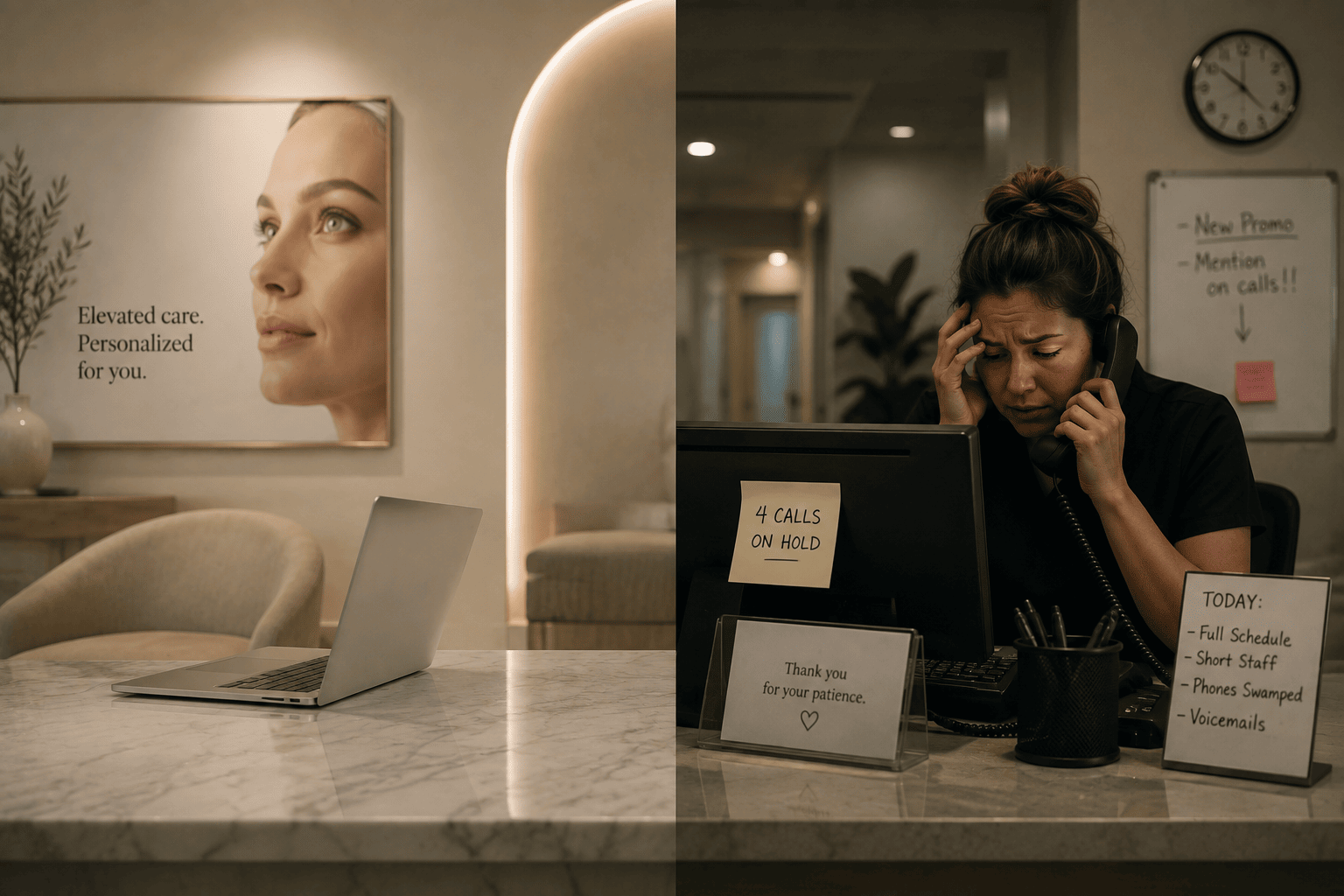
What practices miss is that the consult itself is only half the journey. The other half — the follow-up, the reinforcement, the removal of friction — is where conversions actually happen. Or do not.
Why They Disappear
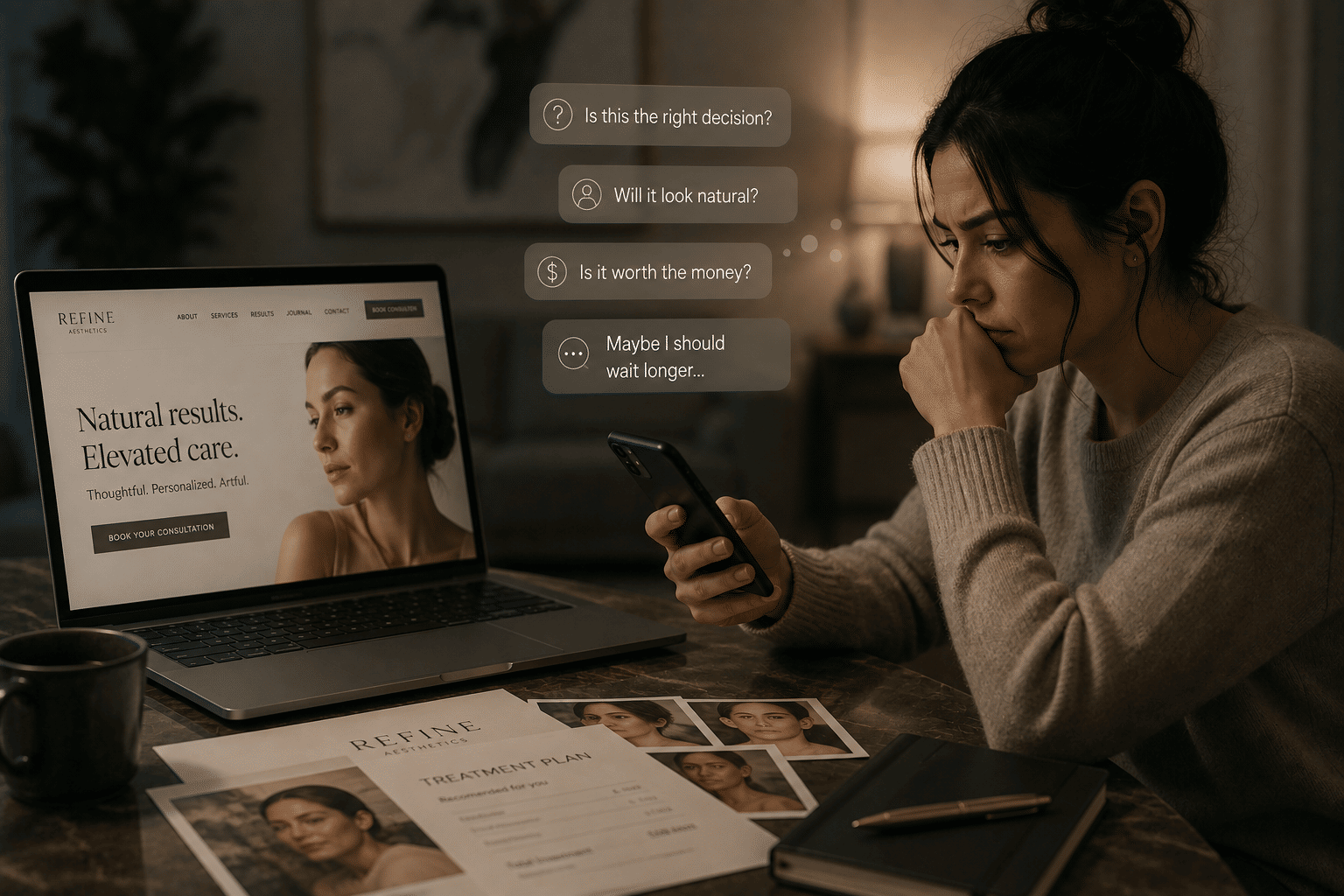
There are three common reasons patients ghost after a consult, and none of them are about the quality of your work. The first is decision fatigue. By the time a patient books a consult, they have already researched multiple providers, compared prices, read reviews, and debated whether they even deserve the treatment. The consult adds a fresh layer of information — sometimes too much. Instead of clarity, they leave overwhelmed.
Of patients who express strong interest during a consult never book without structured follow-up.
The second reason is social friction. Patients rarely make aesthetic decisions in a vacuum. They have partners, friends, or family members whose opinions matter. The consult may have sold the patient, but it did not sell the people they need permission from. Without materials to share — clear pricing, treatment details, before-and-afters — the patient has nothing to advocate with. So they say nothing. And eventually, they forget.
Your patient is not just deciding for themselves. They are preparing a case for everyone else in their life who gets a vote.
The third reason is the absence of a clear next step. A consult that ends with "think about it and let us know" is a consult that ends in silence. Patients need a defined path forward. Not pressure — structure. Without it, the default option becomes doing nothing, and doing nothing is always the easiest choice.

What Great Practices Do Differently
High-converting practices treat the post-consult period as a distinct phase with its own strategy. They do not rely on the patient to remember how they felt. They reinforce it.
The first 24 hours are critical. A personalized follow-up message — not a generic template — that references the specific concerns discussed in the consult signals that the patient was heard. It also extends the emotional connection before it fades.
The practices that win are not the ones with the best consults. They are the ones with the best follow-through.
Great practices also equip patients to advocate. They send a concise summary of the treatment plan, pricing, and expected outcomes that the patient can share with a partner or friend. They make it easy to say yes by removing the need to explain.
Finally, they create a clear, low-friction next step. Whether it is a booking link, a scheduled call, or a deposit option, the path forward is explicit. The patient never has to wonder what to do next. They just have to decide whether to take the step — and the step is already laid out in front of them.
Fixing Your Follow-Up
Start by auditing your current post-consult process. How long does it take for a patient to receive follow-up? What does it say? Is it personalized, or could it have been sent to anyone? Does it include everything the patient needs to make a decision — or does it require them to ask for more?
Map the journey from consult to booking through the patient's eyes. Every delay, every missing piece of information, every moment of confusion is a place where momentum leaks out. Your job is to find those leaks and plug them.
Then, build a follow-up sequence that mirrors the emotional arc of the decision. In the first 24 hours, reinforce confidence. In the next 48, address common objections before they arise. By day five, offer a low-commitment way to stay connected — a question answered, a resource shared, a reminder that the door is open.
The consult is where interest is born. The follow-up is where bookings are made. Treat them with equal intention, and the patients who ghost will become the patients who stay.